"Without question, forgiveness is the most difficult teachings within The Way, and possibly the most necessary." - The Arques Gospel of Mary Magdalene, The Book of the Time of DarknessHave you ever found a book that's so engaging that it got you reading while your crossing the street, while you're waiting for a jeep or while your footsteps away from your office elevator? And after you reach the last leaf of the book you feel like 'wow, this is my entire belief system crunched in one book.'
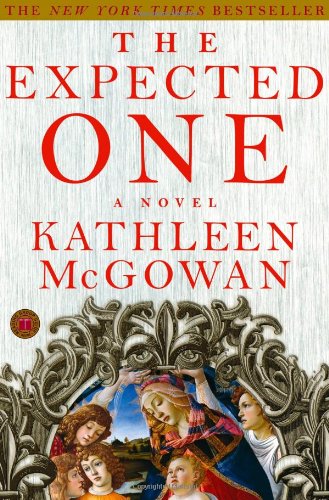
A fictional novel which the author claims to be her own life experiences deliberately written on a literary perspective so as not to risk the exposure of her sources. Fueled by her search for the key to the eternal question of Pontius Pilate on John 18:38, "what is Truth?" this first installment to the Magdalene series stirred intrigue in the Catholic sphere as it brought to light assertions and materials that cost the author two decades to condense.
Kathleen McGowan roughly went down the same road as Dan Brown in uncovering the true role of Mary Magdalene in the Catholic faith. The woman who was misconstrued to be a Harlot for two millenias, emerged as the beloved wife of our dear savior in this novel. With unpublished words from the Arques Gospel of Mary Magdalene showcasing her life with Easa, the passion and the Book of Love, purportedly the gospel written by the Lord with his own hands, in a concurrence, perspective and time precision that's never been known to man, not even to the four evangelists.
Three months away and I would have had this book for two-years already and it was just moments ago when I was able to make it to its last page. How was the feeling you may think? As with other amazing book finds that I allowed to dust first only to find out how incredible they were, this book blew me away. Coming from a catholic school with commendable grades on my Theology class, it does not in any way secured me of any mastery in catholic history. Although the extensive knowledge to that subject is of course reserved to the highest ranks in the Catholic hierarchy or to the ones who have devoted the most portion of their lives learning and understanding the history, teachings and intricacies of the Catholic faith. There however exist in me an identifiably insatiable thirst to learn more about the history of the passion of the Christ from a different vantage point. As corroborated by my book collection, mainly comprised of novels tackling the same issue.
I could only think of two critical reasons how could I have possibly gained such interest. First, my exposure to religion and second, my journalistic instincts to not be appeased by what's on the surface but to always dig deeper on everything. Call it over thinking, but this skepticism that I shared with the author unified us in some sense. She writing this novella and I reading and discovering new pieces from it.
I ask
While I have so many complaints about our era increasingly making people detached from our rich history. I have often wished that we could, at least for one day, be washed back to medieval ages when information is scarce and would need to be acquired rigorously. Thinking about it, I let go a sigh of relief knowing that with inquisitive nature like mine, I wouldn't have lasted a day without being burned at the stake with my heavily 'sacrilegious' thoughts.
Having watched the National Geographic feature on the Gospel of Judas, reading the Da Vinci Code and the Templar Legacy several questions began to whirl in my head some years ago. Most of which I presume to have bothered other authors as well, hence the sprouting of myriads of novels and segments on this matter.
- If God has planned everything for us, does that mean we never get to have a say in our lives? The poor will remain poor and you tell me that's predestined by God himself?
- Why were there only four gospels?
- What does it matter if God had a wife? Much less if he had kids?
- Why does it appear to be lessening his divinity when to me it makes him more human?
- How infallible and accurate were those gospels?
- Spanning 2,000 years, how much pertinent information were 'disregarded' and/or 'reshaped' by the Church or by other self-serving individuals that could have altered the course of Catholic faith?
- More importantly, how does the Church address people, organizations, findings and claims that go against what was established and what they preach?
- Were they purged and eventually buried in history like these recently procured gospels?
Here, I am not challenging the faith of the few who are going read my entry. I am simply expressing my implicit agreement to the author that in this modern times, we should keep an open mind and heart for there will surely be more speculations, arguments and postulations in the years to come. The last thing we need are people who cling to the dogma and who won't dare ask.
Remember, the greatest innovations all began when someone dared to ask and chased for the answer.
"History is not what happened. History is what was written down.More often than not, what we know and accept as history was created by an author with a committed political agenda."- Kathleen McGowan, The Expected OneIf by any chance the author could read this entry, I couldn't express my gratitude enough through these words for answering one of the most perturbing questions I've had since forever.
God creates his plan and he puts each one of us into that place. But he does not force us into action. Like any good father, the lord guides us. But it is up to each of us to choose our master, and that comes down to a choice between God’s plan and earthly desires.” - Kathleen McGowan, The Expected One


No comments:
Post a Comment
I know you love me, so do drop me a line :)